Big Sky Autonomous Systems Complex (BSASC)
Commercial Capability Overview (Unclassified / Industry Distribution)
The Big Sky Autonomous Systems Complex (BSASC) is a privately operated, U.S.-based autonomous systems test, training, and evaluation environment designed for government, defense, and commercial partners developing next-generation uncrewed, counter‑uncrewed, and electronic warfare–relevant technologies. Located in Montana, BSASC provides a controlled, discreet, and operationally realistic setting for validating systems, concepts, and teams against contemporary threat conditions.
Range & Operating Environment
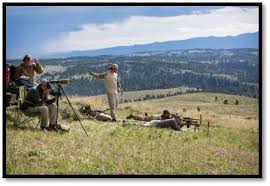
BSASC encompasses approximately 6,000 acres of isolated, fully controlled terrain in a high‑altitude environment averaging roughly 6,500 feet above mean sea level. The complex features mountainous relief, open maneuver corridors, gullies, and vertical terrain, allowing realistic testing of endurance, navigation, communications resilience, sensor performance, and autonomy under environmental stress. Full perimeter control enables 360‑degree operations with minimal external interference.
Regulatory & Operational Authorities
The complex maintains all required regulatory lines and approvals to support advanced uncrewed aircraft operations. These include authorizations for night operations, higher‑speed flight profiles, beyond visual line‑of‑sight (BVLOS) testing, and operations up to 1,000 feet above ground level within defined safety frameworks. This posture enables rapid test iteration, repeatable events, and compressed development timelines for partners.
Counter‑UAS & Electronic Warfare Support
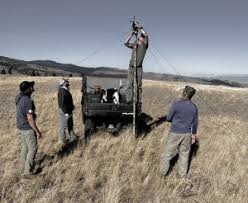
BSASC is structured to support both kinetic and non‑kinetic counter‑UAS and electronic warfare testing. Capabilities include detection and tracking evaluation, defeat‑mechanism assessment, electromagnetic environment experimentation, and signature‑management trials, conducted under appropriate federal and spectrum authorizations. Integrated instrumentation and data‑collection architecture supports detailed post‑event analysis.
Training & Operational Relevance
Training and experimentation at BSASC are informed by the most current publicly available lessons observed from modern conflicts, including Ukraine and Gaza. Scenarios emphasize rapid adaptation cycles, survivability under persistent ISR, counter‑drone engagement timelines, electronic warfare effects, and dispersed operations. The result is a training and test environment aligned with today’s operational realities rather than legacy models.
Range Schematic (Conceptual)
The schematic below represents a notional layout of the BSASC operating environment. Exact dimensions, frequencies, and system placements are controlled and disclosed only to approved partners.
| High‑Altitude Test Corridor | BVLOS / Endurance | ISR & Autonomy Stress |
| EW / Spectrum Zone | RF / EM Effects | Signature & Resilience |
| Counter‑UAS Range | Detection & Defeat | Layered Threats |
| Vertical Terrain Area | Urban / Cliff Analogues | Navigation & ISR |
| Operations & Control Zone | Mission Planning | Data Capture & Analysis |

Commercial Value Proposition
BSASC offers partners a rare combination of regulatory flexibility, environmental realism, operational discretion, and contemporary relevance. The complex is optimized for companies and agencies seeking to move quickly from prototype to operational confidence while reducing development risk in a controlled U.S. environment.
The facility is suitable for defense primes, venture‑backed autonomy firms, counter‑UAS developers, sensor and communications companies, and government customers seeking an end‑to‑end testing and training solution aligned with emerging conflict dynamics.